 +91 1664-243891/92/94
 info@hindustangum.com


.png)
.png)
What Is Soil Health and Why Is It Important for Better Crop Yield?
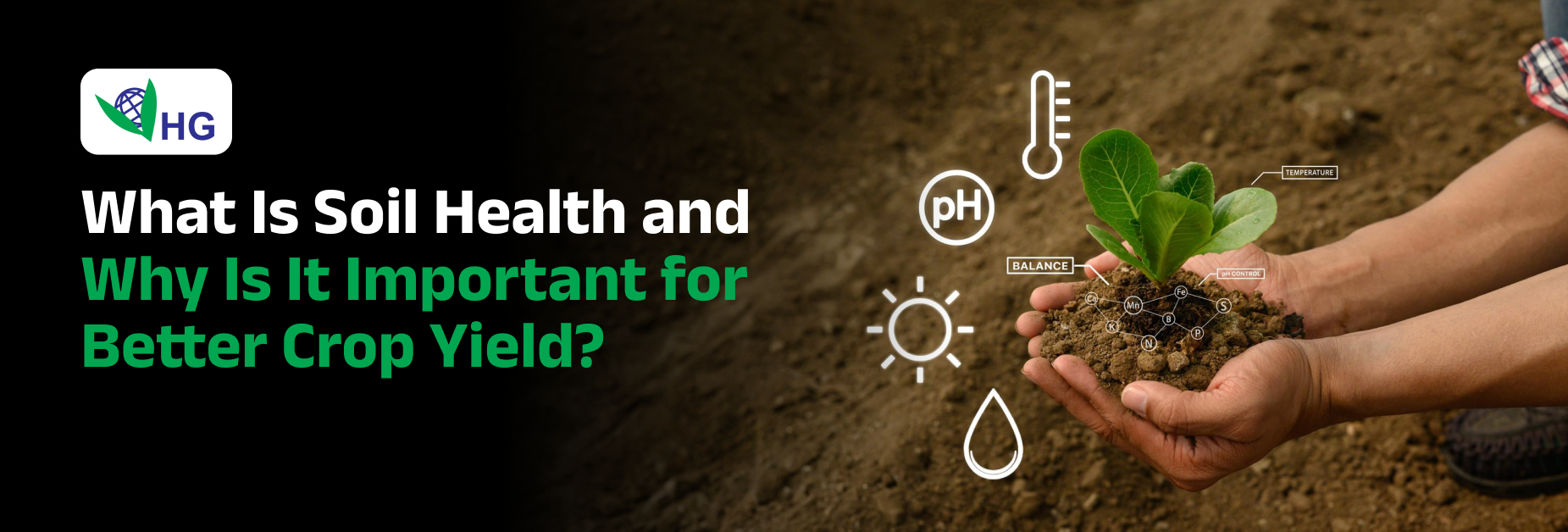
What Is Soil Health and Why Is It Important for Better Crop Yield?
The Food and Agriculture Organization (FAO) estimates that nearly one-third of the world's soils are degraded, posing a major challenge for farmers. Poor soil health reduces crop yields, increases fertilizer and irrigation costs, and threatens long-term agricultural sustainability.
Soil is much more than dirt. A single teaspoon of healthy soil contains billions of microorganisms that play a vital role in plant growth. Healthy soil provides the foundation for stronger crops, better nutrient uptake, improved water retention, and higher productivity.
In this guide, we'll explore what soil health is, its key components, how it impacts crop yield, common signs of degraded soil, and practical ways to improve it.
What Is Soil Health?
Soil health refers to the soil's ability to function as a living ecosystem that supports plants, animals, and microorganisms while sustaining agricultural productivity. Healthy soil maintains a balance between its physical structure, chemical composition, and biological activity.
The Three Core Pillars of Soil Health
Healthy soil depends on three essential components that work together to support plant growth.
1. Physical Properties (Structure and Texture)
Soil structure describes how sand, silt, and clay particles bind together to form stable aggregates. A healthy structure allows air, water, and roots to move freely through the soil.
Compacted soil caused by excessive tillage, machinery traffic, or loss of organic matter can lead to:
- Restricted root growth
- Poor water infiltration
- Reduced oxygen availability
- Lower microbial activity
- Increased nutrient loss
Good soil structure forms the foundation of productive farming.
2. Chemical Properties (pH and Nutrient Balance)
Soil chemistry determines how efficiently plants absorb nutrients. Most crops perform best in soils with a pH between 6.0 and 7.0.
If soil pH becomes too acidic or too alkaline, nutrients become unavailable even when fertilizers are applied.
Key Points
- Phosphorus is most available between pH 5.5–7.5.
- Highly acidic soils can cause iron and manganese toxicity.
- Regular soil testing helps maintain the proper nutrient balance.
3. Biological Properties (The Soil Microbiome)
Healthy soil contains billions of living organisms, including bacteria, fungi, earthworms, protozoa, and nematodes. Together they:
- Recycle nutrients naturally
- Improve soil aeration
- Increase organic matter decomposition
- Support root development
- Improve soil fertility
Organic matter feeds these beneficial organisms and improves soil structure, moisture retention, and nutrient cycling.
How Soil Health Improves Crop Yield
Healthy soil directly influences crop productivity in several important ways.
Enhanced Water Retention and Drainage
Healthy soils rich in organic matter absorb excess rainfall like a sponge and gradually release moisture during dry periods. This improves drought resistance and reduces water stress.
Maximum Nutrient Availability
Only a portion of applied fertilizer is actually used by crops. Healthy soil microorganisms increase nutrient efficiency by naturally fixing nitrogen and releasing phosphorus and other nutrients, reducing fertilizer waste.
Natural Disease and Pest Resistance
Beneficial microbes suppress harmful pathogens such as Fusarium and Pythium. Healthy soil also strengthens plant immune systems, making crops naturally more resistant to diseases and pests.
Common Signs of Poor Soil Health
Your field often provides visible signs when soil health is declining.
- Crusting or cracking after rainfall
- Standing water or poor drainage
- Yellow or stunted crops
- Compacted soil that's difficult to dig
- Pale or gray topsoil
- Very few or no earthworms
If multiple symptoms appear regularly, it's time to improve your soil management practices.
How to Improve Soil Health
Crop Rotation and Cover Crops
Crop rotation reduces pest cycles, balances nutrient use, and improves soil fertility. Cover crops protect against erosion, increase organic matter, and keep beneficial microbes active during the off-season.
Minimize Soil Disturbance (No-Till Farming)
Reducing tillage preserves soil structure, protects microbial communities, and improves long-term water retention. Although initial transition may be challenging, no-till farming often increases profitability over time.
Use Advanced Soil Health Products
When soil is severely degraded, specialized soil amendments can accelerate recovery.
Ankurayam by Hindustangum is a biodegradable soil conditioner that:
- Improves soil moisture retention
- Enhances microbial activity
- Increases soil porosity
- Supports stronger root development
- Improves nutrient efficiency
Recommended application: 5 kg per acre during planting.
Conclusion
Healthy soil is the foundation of productive and profitable farming. By improving soil structure, balancing nutrients, encouraging beneficial microorganisms, and adopting sustainable practices like crop rotation and reduced tillage, farmers can achieve higher yields while lowering input costs.
Start by testing your soil, increasing organic matter, planting cover crops, and using effective soil conditioners where needed. Investing in soil health today leads to healthier crops and better harvests for years to come.
Ready to Restore Your Soil's Potential?
Ankurayam by Hindustangum helps improve soil moisture retention, increase microbial activity, and restore soil productivity from the very first season.
Visit hindustangum.com to explore soil health solutions built for real farm conditions.
Frequently Asked Questions (FAQs)
Why is soil health important for crop production?
Healthy soil provides plants with water, oxygen, nutrients, and beneficial microorganisms. It promotes stronger root systems, better nutrient uptake, and higher crop yields while reducing dependence on fertilizers and pesticides.
How does soil health affect crop yield?
Healthy soil improves water availability, nutrient absorption, root development, and disease resistance. Together, these factors lead to healthier plants and more consistent crop production.
What are the benefits of healthy soil in farming?
Healthy soil retains moisture, drains efficiently, reduces fertilizer requirements, suppresses diseases, improves root growth, and increases both crop yield and quality.
How can I quickly improve soil organic matter?
Add compost or well-decomposed manure, grow cover crops, minimize tillage, retain crop residues, and use soil amendments that improve moisture retention and microbial activity.
How do I know if my soil is healthy?
Healthy soil has good structure, contains earthworms, drains well, supports vigorous crop growth, and contains adequate organic matter. The most reliable assessment comes from a professional soil test measuring pH, nutrients, and organic matter.